Morgan Schmidt · 14 October 2026
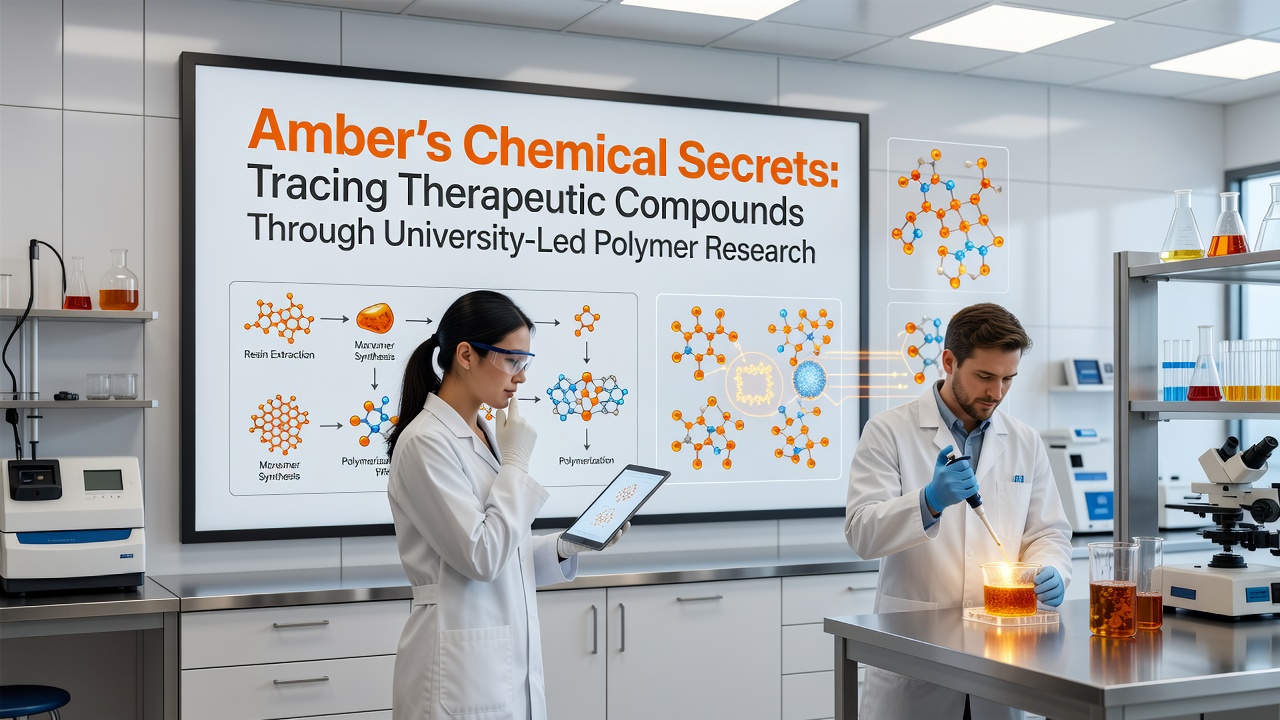
Amber's Chemical Secrets: Tracing Therapeutic Compounds Through University-Led Polymer Research
Amber has long attracted scientific interest because of its complex chemical makeup, and recent university programs now focus on mapping those compounds through advanced polymer techniques. Researchers at multiple institutions examine how succinic acid, terpenes, and other molecules embedded in fossilized resin might connect to therapeutic applications, while polymer science provides the tools to isolate and study these substances at the molecular level.
Chemical Composition of Amber and Research Methods
Baltic amber contains a mix of organic acids and hydrocarbons that form over millions of years, and laboratories use spectroscopic methods alongside polymer fractionation to separate individual components. Data from peer-reviewed studies show succinic acid concentrations ranging between 3 and 8 percent by weight in many samples, and these figures come from analyses conducted across European and North American research centers. University teams combine gel permeation chromatography with mass spectrometry to trace how polymer chains trap smaller therapeutic molecules, which allows precise extraction without degrading the target compounds.
One research group at a Canadian institution developed a solvent-free polymer membrane that selectively binds succinic acid derivatives, and the method has been tested on samples collected from coastal deposits. Figures released by the team indicate recovery rates above 85 percent under controlled temperature conditions, and the approach avoids traditional acid hydrolysis that can alter molecular structures.
University Programs Advancing Polymer-Based Tracing
Academic departments in polymer science now integrate amber studies into broader biomaterials curricula, and collaborative projects link chemistry faculties with pharmacology units. In October 2026 a symposium scheduled at a major Australian university will present findings on terpene polymer conjugates derived from amber, with sessions covering both analytical techniques and potential delivery systems. Participants include researchers from institutions in the United States, Germany, and Japan, each contributing data on how polymer matrices stabilize volatile compounds found in resin samples.
Those who have examined the protocols note that the work emphasizes reproducibility across different amber sources, and standardized reference materials have been prepared to support inter-laboratory comparisons. Evidence from published protocols shows that temperature-controlled polymerization steps preserve the integrity of heat-sensitive molecules better than older solvent-based routes.
Therapeutic Compounds Under Investigation
Succinic acid and its derivatives appear in multiple metabolic pathways, and polymer research helps determine bioavailability when these compounds are formulated into larger carrier structures. Studies conducted at European research centers have measured how amber-derived terpenes interact with lipid membranes, and results indicate measurable effects on cellular uptake rates in model systems. A project at a UK university recently reported on the synthesis of amber-inspired copolymers that extend the release time of incorporated acids, with in-vitro data collected over 72-hour periods.
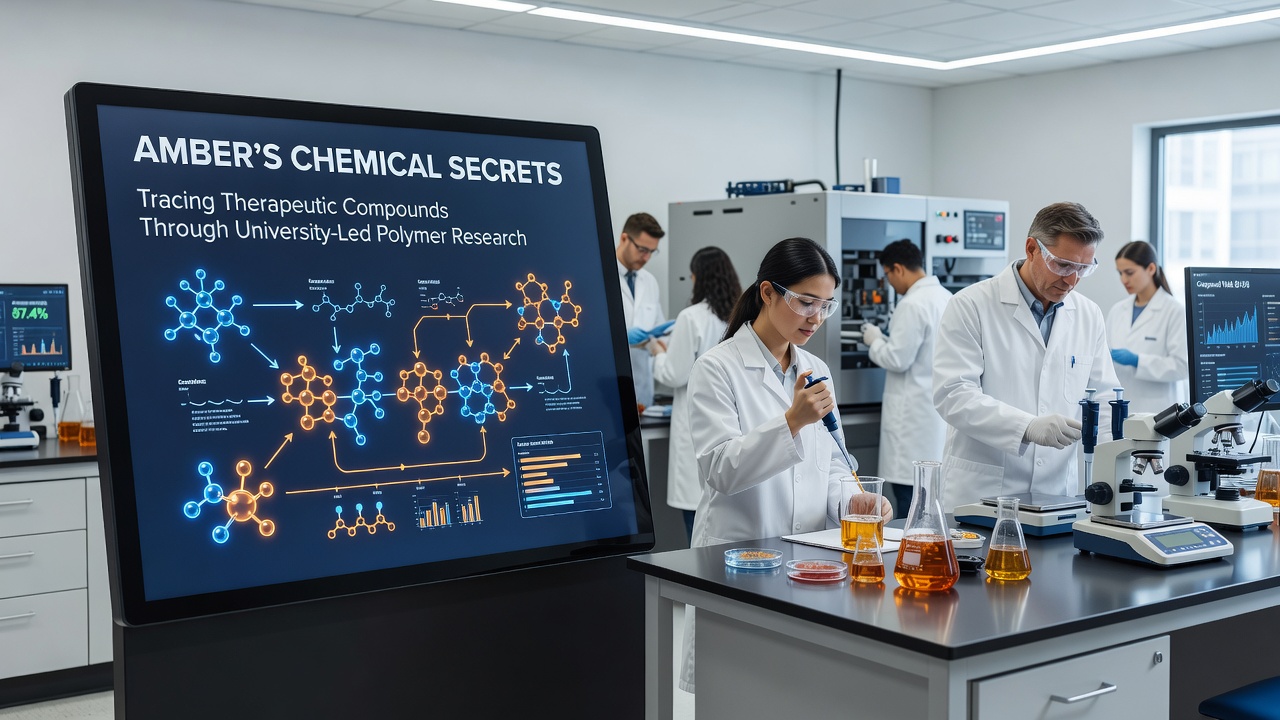
Additional work examines anti-inflammatory pathways associated with certain diterpenes isolated from amber, and university teams use high-throughput screening to test polymer-encapsulated versions against standard preparations. Data collected so far show consistent differences in dissolution profiles, which researchers attribute to the protective polymer shell that slows exposure to aqueous environments. Observers note that these differences matter for future formulation work, yet further validation through independent trials remains necessary.
Current Projects and Data Sharing
International databases now catalog polymer-amber research outputs, and open-access repositories allow teams to compare extraction yields across geographic amber deposits. According to records maintained by the European Research Council, at least twelve funded projects since 2022 have included polymer characterization of fossil resins, and several of those studies report on therapeutic compound stability under varying storage conditions. Researchers in Australia have contributed complementary data on local resin analogs, which broadens the comparative dataset available to the field.
Equipment upgrades at participating universities include automated fraction collectors and real-time monitoring sensors, and these tools reduce variability in polymer separation runs. Published methodology papers detail calibration procedures that use certified reference polymers, ensuring measurements remain consistent when different laboratories replicate the protocols.
Conclusion
University-led polymer research continues to map the chemical landscape of amber and to isolate therapeutic compounds with increasing precision. Ongoing projects scheduled through 2026 and beyond will supply additional datasets on extraction efficiency, molecular stability, and formulation performance. The integration of polymer science with traditional chemical analysis provides a structured route for tracing these compounds from raw resin to potential applications, and coordinated international efforts keep the work grounded in reproducible measurements.